


29 March 2026
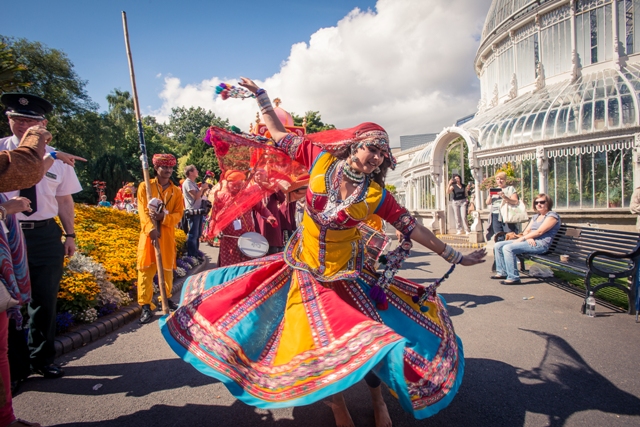
In 2007, Artsekta took a bold step. Building on its early work in intercultural arts and global education, the organisation set out to create something that didn’t yet exist in Belfast — a large-scale public space where the city’s growing diversity could be visible, celebrated, and experienced together.
That idea became Belfast Mela.
The word Mela, derived from Sanskrit, means to meet. From the beginning, that simple idea captured the ambition behind the festival: to create a place where people from all backgrounds could come together through creativity, culture, and shared experience.
At the time, Belfast was still navigating how to move beyond the narratives of its troubled past. While progress had been made politically, there were few spaces where people could gather across cultures in ways that felt natural and welcoming. Artsekta recognised that creativity could help open those spaces.
Belfast Mela was born from a collective belief that culture could help shape a different story about the city — one rooted in openness, collaboration, and belonging.
From its earliest editions, the festival brought together music, dance, food, performance, and cultural traditions from across the world. But more importantly, it brought people together. It created opportunities for encounter, curiosity, and celebration that went beyond cultural boundaries.
Over two decades more than half a million people have attended Belfast Mela. What began as an ambitious idea has become a significant moment in the city’s cultural calendar — a space where Belfast’s diversity is not just acknowledged, but proudly visible.
For many communities, the festival provided one of the first opportunities to confidently express their cultural identity in a public setting. For audiences, it offered new experiences and perspectives. For artists, it created a space to experiment, collaborate, and connect with new audiences.
Mela has also played a role in helping reshape how Belfast sees itself. As the city has become more diverse, the festival has helped reflect that change, offering a vision of Belfast as a place where different cultures are part of a shared civic story.
Its impact goes beyond the festival itself. Over the years, Mela has contributed to tourism, placemaking, and the wider cultural life of the city. It has encouraged new approaches to audience engagement and created opportunities for collaboration across the arts sector. Most importantly, it has helped foster a sense of belonging — not for some, but for everyone.
Looking back, Belfast Mela represents an important moment in Artsekta’s journey. It marked a move from project-based work into shaping cultural experiences at a city scale. It showed what could happen when creativity is used not just to represent diversity, but to bring people together around it.
Today, as Belfast continues to evolve, the importance of spaces like Mela remains clear. In a changing society, the need for shared cultural experiences — spaces where people can meet as equals — is as important as ever.
As we mark 20 years of Artsekta, Belfast Mela stands as one of the clearest examples of what can happen when creativity is used to build connection, confidence, and community.
This is part of our series Marking Time: Artsekta at 20.


Are you part of Belfast’s East or Southeast Asian community? Do you have a story you would like to tell? ArtsEkta is looking for participants to join Stories from Where We Stand: a new community storytelling and filmmaking project exploring identity, belonging, culture and life in Belfast. We’re inviting people from East and Southeast Asian […]
24 Sep 2026
ArtsEkta was honoured to welcome the Uachtarán na hÉireann Catherine Connolly to Olive Tree House in Belfast as the organisation celebrates its 20th anniversary and two decades of championing cultural diversity, creativity, and inclusion across Northern Ireland. The Presidential visit recognised ArtsEkta’s longstanding contribution to promoting intercultural dialogue and celebrating the rich cultural heritage of […]
04 Aug 2026
Prepare to be inspired, delighted, and transported as Belfast Mela, Northern Ireland’s largest and most vibrant celebration of cultural diversity, returns this August for its 20th anniversary year. A spectacular week long programme of multicultural events is planned for this year’s special 20th Belfast Mela Festival which starts with the magical Mela Carnival on Saturday 22 […]
04 Jun 2026