


21 January 2026
20 years ago Artsekta was founded at a moment of profound transition. In the years following the Good Friday Agreement, Northern Ireland was beginning to imagine a different future — one shaped not only by peace, but by the difficult, ongoing work of rebuilding trust, relationships, and shared civic space. While political frameworks were being established, the social and cultural work of living together was only just beginning.
Led by Nisha Tandon OBE together with arts and community activists, ArtsEkta emerged within this context, responding to a clear need. At a time when communities were still deeply shaped by division, there was very little space for cultural exchange across difference — and even less recognition of the voices and creative practices of people from diverse ethnic and cultural backgrounds.
From the outset, we set out to change that.
As the first organisation in Northern Ireland to pioneer intercultural arts practice, we worked with artists and communities whose stories were rarely centred in public cultural life. The focus was not simply on representation, but on meaningful participation — supporting artists from diverse backgrounds to develop their practice, share their work, and contribute to a more inclusive cultural landscape.
In a post-conflict society, this work mattered deeply. Creativity offered a way to meet beyond entrenched identities. Cultural activity created spaces where people could encounter one another not through the language of politics or history, but through shared experience, curiosity, and imagination.
Looking back now, those early projects were both urgent and hopeful. They challenged narrow ideas of who culture was for, and who had the right to shape it. They also laid foundations that continue to influence how intercultural work is understood and valued across the sector today.
Twenty years on, the context has changed — but the importance of this work has not. Questions of belonging, representation, and connection remain central to how we live together, and possibly even more so in today’s world. Our role has evolved, but our commitment to supporting artists, fostering dialogue, and building cultural connection continues to be rooted in those early post-agreement years.
This anniversary is not only a moment to look back, but to recognise how far-reaching those first steps have been — and how necessary it remains to create space for creativity as a force for connection.
This is one of many moments that shaped 20 years of ArtsEkta.
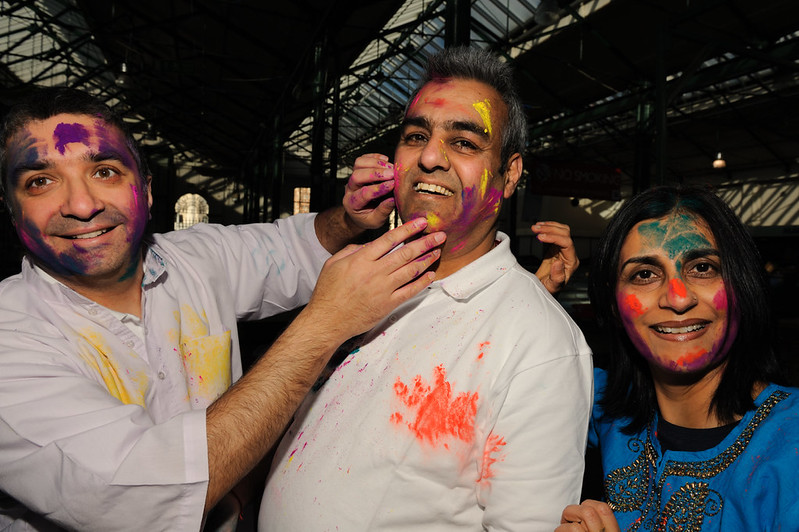
Pictured above are key founders of ArtsEkta (L to R): Mukesh Sharma MBE DL, Pritam Sridhar and Nisha Tandon OBE


Marking Time: ArtsEkta at 20 brings together monthly reflections on the projects, people, and moments that have shaped ArtsEkta over the last twenty years — exploring creativity as a force for connection in a post-conflict and evolving society. Artsekta’s first project was called One World Day. At the time, the organisation was newly formed, but […]
26 Feb 2026
ArtsEkta was recently invited to Tunisia as part of an international cultural visit aimed at developing a long-term cultural exchange partnership between Northern Ireland and Tunisia. The visit provided a valuable opportunity to strengthen relationships, explore shared priorities, and identify new areas for collaboration across the arts, culture, and creative industries. During the visit, a […]
17 Feb 2026
Marking Time: ArtsEkta at 20 brings together monthly reflections on the projects, people, and moments that have shaped ArtsEkta over the last twenty years — exploring creativity as a force for connection in a post-conflict and evolving society. 20 years ago Artsekta was founded at a moment of profound transition. In the years following the […]
21 Jan 2026